 Node.js: Reading environment variables
This documentation is part of the Handle secrets guide. View the full guide here: How to handle secrets with Node.js.
👋 Welcome to the Stackhero documentation!
Stackhero delivers a ready-to-use Node.js cloud environment designed to help you move faster:
- Deploy to production in seconds with a simple
git push. No extra tooling or manual setup is required.- Bring your own domain and benefit from automatic HTTPS certificates, keeping your application secure without extra configuration.
- Automatic backups, one-click updates, and predictable pricing help you focus on shipping features, and Stackhero manages the infrastructure for you.
- Built on private, dedicated infrastructure for consistent performance and strong security.
Save time and reduce operational overhead: you can have your application running on Stackhero's Node.js cloud hosting in just a few minutes.
Inside your app.js file, you can access your environment variable using process.env, like so:
console.log(process.env.MY_PASSWORD);
This will display myDevelopmentPassword.
Now, your password is defined outside of your code. This helps ensure it will not accidentally end up in your Git repository.
If you are using Stackhero in a production environment, you can define a new environment variable named MY_PASSWORD with the value myProductionPassword right from your Node.js service dashboard. This makes it easy to keep things running smoothly between environments.
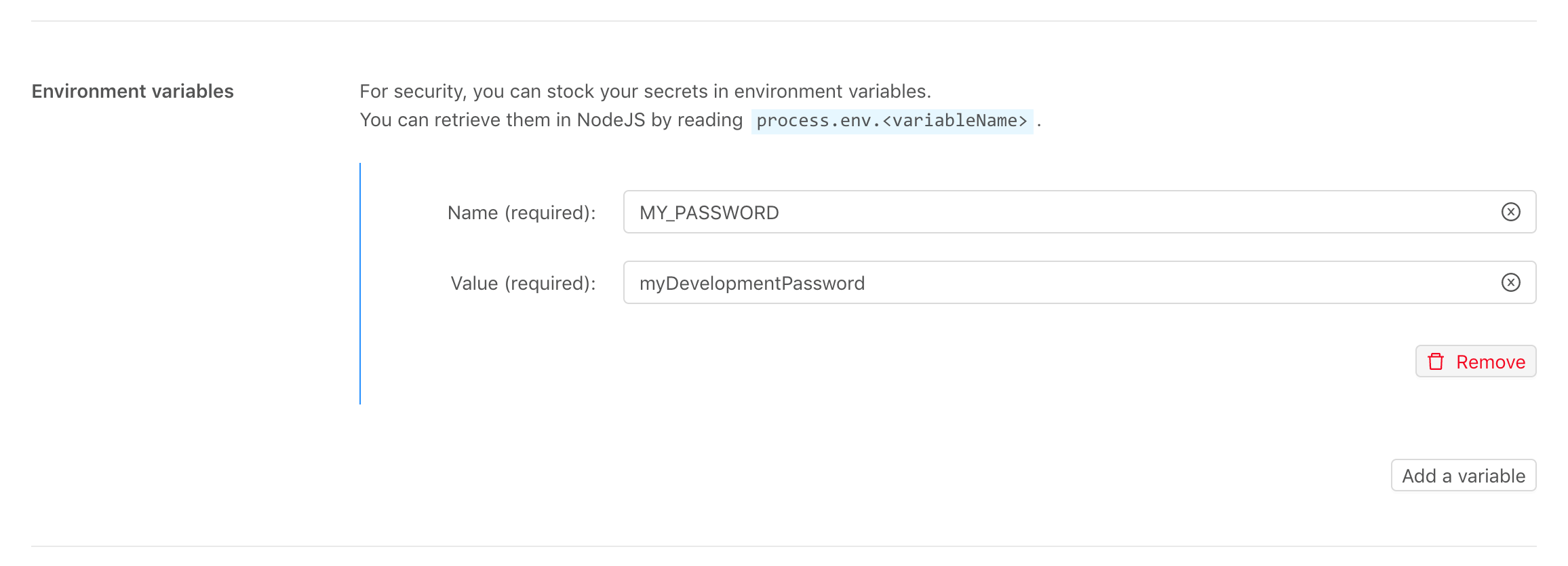 Example of Node.js configuration on the Stackhero dashboard
With this setup, your password is no longer stored in your code, and you can easily use different credentials for development and production environments.